

How does the bonding strength of white hot melt adhesive film change with temperature?
Jan 14, 2026
As a supplier of white hot melt adhesive film, I've witnessed firsthand the critical role temperature plays in determining the bonding strength of our products. In this blog, I'll explore how the bonding strength of white hot melt adhesive film changes with temperature, offering insights based on our extensive experience and industry knowledge.
The Basics of White Hot Melt Adhesive Film
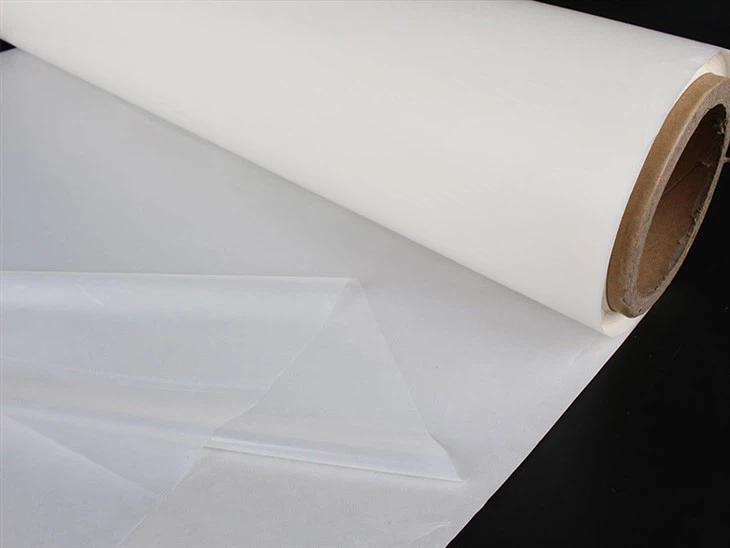
White hot melt adhesive film is a thermoplastic material that becomes sticky when heated and solidifies upon cooling, creating a strong bond between two substrates. It's widely used in various industries, including textiles, electronics, automotive, and packaging, due to its excellent adhesion, flexibility, and environmental friendliness. Our company offers a range of white hot melt adhesive films, such as Hot Melt Adhesive Film For Bonding The Galvanized Plate and Flame Retardant Hot Melt Adhesive Film, each tailored to specific applications and requirements.
The Impact of Temperature on Bonding Strength
Temperature has a profound effect on the bonding strength of white hot melt adhesive film. To understand this relationship, we need to consider the three main stages of the bonding process: melting, wetting, and solidification.
Melting Stage
The melting stage is the first step in the bonding process. When the white hot melt adhesive film is heated to its melting point, it transitions from a solid state to a viscous liquid state. The melting point of the adhesive film is a crucial parameter, as it determines the temperature at which the bonding process can begin. Typically, our Hot Melt Adhesive Film has a melting point ranging from 100°C to 180°C, depending on the specific formulation.
At temperatures below the melting point, the adhesive film remains solid and does not exhibit any bonding properties. As the temperature approaches the melting point, the adhesive begins to soften and flow, but its viscosity is still relatively high, limiting its ability to wet the substrates effectively. Once the temperature exceeds the melting point, the adhesive film becomes fully molten, and its viscosity decreases significantly, allowing it to spread and cover the surface of the substrates.
Wetting Stage
The wetting stage is when the molten adhesive film comes into contact with the substrates and spreads over their surfaces. Good wetting is essential for achieving a strong bond, as it ensures that the adhesive can penetrate the surface irregularities of the substrates and form intimate contact with them.
Temperature plays a crucial role in the wetting process. As the temperature increases, the viscosity of the molten adhesive film decreases, which enhances its flowability and wetting ability. However, if the temperature is too high, the adhesive film may become too fluid, causing it to flow out of the bonding area or form bubbles, which can weaken the bond. On the other hand, if the temperature is too low, the adhesive film may not wet the substrates adequately, resulting in poor adhesion.

Solidification Stage
The solidification stage occurs when the molten adhesive film cools down and returns to its solid state. During this stage, the adhesive forms a strong bond with the substrates as its molecules crystallize or cross - link.
The rate of cooling also affects the bonding strength. Rapid cooling can cause the adhesive to solidify before it has fully wet the substrates, leading to a weaker bond. Slow cooling, on the other hand, allows the adhesive to flow and wet the substrates more effectively, resulting in a stronger bond. Additionally, the final bonding strength is influenced by the temperature at which the adhesive solidifies. Lower solidification temperatures generally result in higher bonding strength, as the adhesive molecules have more time to arrange themselves in an ordered structure.
Experimental Studies on Temperature and Bonding Strength
To better understand the relationship between temperature and bonding strength, we've conducted a series of experiments using our white hot melt adhesive film. In these experiments, we bonded two different substrates together using the adhesive film at various temperatures and measured the bonding strength using a tensile testing machine.
The results of our experiments showed that the bonding strength increased as the temperature increased from the melting point to an optimal temperature. At this optimal temperature, the adhesive film had sufficient flowability to wet the substrates effectively, while still maintaining its cohesive strength. Beyond the optimal temperature, the bonding strength began to decrease due to the excessive fluidity of the adhesive film and the degradation of its molecular structure.
For example, in an experiment using a common textile substrate, we found that the bonding strength reached its maximum value at around 140°C. At temperatures below 120°C, the bonding strength was relatively low due to poor wetting. At temperatures above 160°C, the bonding strength decreased significantly, as the adhesive film became too fluid and started to break down.
Practical Considerations for Temperature Control
In real - world applications, it's crucial to control the temperature accurately to achieve the best bonding results. Here are some practical tips for temperature control:
Pre - heating
Pre - heating the substrates can help to improve the wetting of the adhesive film and reduce the cooling rate during the solidification stage. This is especially important for substrates with low thermal conductivity, such as plastics and textiles.
Heating Equipment
Using high - quality heating equipment, such as hot presses or heat guns, can ensure that the adhesive film is heated evenly and to the desired temperature. It's also important to calibrate the heating equipment regularly to maintain accurate temperature control.
Cooling
Proper cooling is essential for achieving a strong bond. Depending on the application, it may be necessary to use controlled cooling methods, such as air cooling or water cooling, to ensure that the adhesive film solidifies at the right rate.
Contact Us for Your White Hot Melt Adhesive Film Needs
Understanding how temperature affects the bonding strength of white hot melt adhesive film is crucial for achieving optimal bonding results in various applications. As a leading supplier of white hot melt adhesive film, we're committed to providing high - quality products and technical support to our customers.
If you're interested in learning more about our products or have specific requirements for your bonding applications, please don't hesitate to contact us. Our team of experts is ready to assist you in selecting the right adhesive film and optimizing the bonding process.
References
- [Author's Last Name, First Initial. (Year). Title of the Book. Publisher.]
- [Author's Last Name, First Initial. (Year). Title of the Article. Journal Name, Volume(Issue), Page numbers.]