


Company Profile
Jiangyin Weitao Plastic New Material Co., Ltd. was established on December 27, 2011. We have been engaged in this industry for more than 10 years. About three years after the establishment of the company, we have become the top enterprise in this adhesive industry, especially in the technology research and development, we have made a lot of achievements. We have obtained more than ten invention patents, breaking the industry for a long time difficult to solve the problem. For example, our flame-retardant hot melt adhesive is now very popular in the European and American markets. In the future, we will focus more on technology development and solve more problems for our customers. Also better serve customers from all over the world.
Why Choose Us
Factory
Our company located in No.22 Longteng Road Zhouxi Industrial Park Zhouzhuang Town Jiangyin City, Jiangsu Province. We have two big work shop,and there is 300 employees.
Production Equipment
There are four imported extruding machines,one film blowing machine,one granulating machine, dividing and cutting machines and two laminating fabric machines.
High Quality
There have many products, competitive price, good quality and long time sale out Europe and America, southeast, middle east and other country.
Professional Team
We will reply the customer inquiries in time. We will do our best to meet the needs of our customers. For all kinds of problems proposed by customers, we will do our best to help customers solve them. We will send the most suitable samples for customers according to their needs. We will also offer you the best price for your inquiry.
-
![UL94 V0 Flame Retardant Hot Melt Adhesive Film]()
UL94 V0 Flame Retardant Hot Melt Adhesive Film
Add to Inquiry -
![Fireproof Clothing Hot Melt Adhesive Film]()
Fireproof Clothing Hot Melt Adhesive Film
Add to Inquiry -
![Flame Retardant Hot Melt Adhesive Film For Electronics]()
Flame Retardant Hot Melt Adhesive Film For Electronics
Add to Inquiry -
![Hot Melt Adhesive Film For Electronic Products]()
Hot Melt Adhesive Film For Electronic Products
Add to Inquiry -
![Reach UL94V-0 Flame Retardant Level Hot Melt Adhesive Film]()
Reach UL94V-0 Flame Retardant Level Hot Melt Adhesive Film
Add to Inquiry -
![Flame Retardant Hot Melt Adhesive Film]()
Flame Retardant Hot Melt Adhesive Film
Add to Inquiry
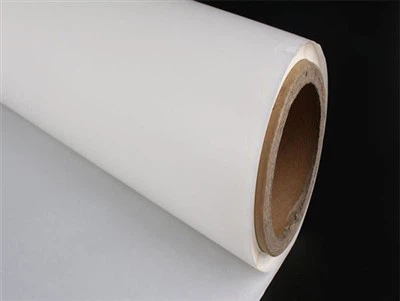


What is Flame-Retardant Hot Melt Adhesive Film?
Flame retardant hot melt adhesive film is a hot melt adhesive film with a flame retardant function. Aspolymer material, hot melt adhesive film is flammable. However, on many occasions, we need to put the functional requirements of flame retardant for adhesive products so that the finished products hhigher level of fire retardant and flame retardant.
Flame retardant hot melt adhesive film is produced with flame retardant in its raw material formula, flame retardant and raw material particles are blended and granulated. The prepared particles are thinto the film production machine, and the flame retardant hot melt adhesive film is produced by coatcasting.
Enhanced Safety
The primary advantage of using flame-retardant hot melt adhesive film is improved safety. It reduces the risk of fire and the spread of flames in the event of an ignition source, which is particularly important in applications where fire safety is critical, such as in construction, transportation, and electrical applications.
Durability
Flame-retardant hot melts often exhibit excellent thermal stability, which means they can maintain their physical and adhesive properties at elevated temperatures, enhancing the longevity of the bonded joints.
Ease of Use
Hot melt adhesives, in general, are easy to apply and quick to set, allowing for rapid processing times and efficient manufacturing workflows. Flame-retardant varieties retain these processing advantages.
Environmentally Friendly
Many flame-retardant hot melt adhesives are formulated to be solvent-free and VOC-free, making them more environmentally friendly than traditional adhesives that may contain harmful solvents.
Strength and Flexibility
The adhesive maintains good bond strength and flexibility, which is crucial for accommodating movement and stress in the bonded assembly without cracking or failing.
Type of Flame-Retardant Hot Melt Adhesive Film
PA hot melt adhesive film
The comprehensive performance of PA hot melt adhesive film is relatively good. The functional PA hot melt adhesive film can achieve a flame retardant level of V0 according to customer requirements; it is also resistant to boiling water. It can be used in shoes, bags, car interior accessories, and lamination of shirts and leather garments.
PES hot melt adhesive film
PES hot melt adhesive film has relatively good adhesion to metal materials, so PES hot melt adhesive film is used as the main adhesive for bonding metal materials. For example: bonding between metal and metal, bonding between metal and non-woven fabrics, metal and sponge materials, etc. Of course, PES hot melt adhesive film is not limited to the bonding and compounding of metal materials. It is also used in flocking transfer printing and woven label backing adhesive.
EVA hot melt adhesive film
EVA hot melt adhesive film has a low lamination temperature and is usually used in products and industries that require low temperature lamination. A typical case of EVA hot melt adhesive film application - seamless wall covering back adhesive. Use EVA hot-melt adhesive film as the back glue of the wall cloth and apply it on the back of the wall cloth in advance. When pasting the wall covering, remove the release material on the back and then paste it.
TPU hot melt adhesive film
Since TPU hot melt adhesive film has many options, its applicability is relatively wide. Considering our customer cases comprehensively, TPU hot melt adhesive film is widely used in the lamination of nylon cloth, insole lamination, leather material lamination, and sports fabric lamination.
EAA hot melt adhesive film
The application scenarios of EAA hot melt adhesive film are mainly concentrated in automotive interiors. Of course, in addition to its large number of applications in automotive interiors, it also plays a very important role in the composite bonding of aluminum honeycomb panels.
Flame Retardant Mechanism of Flame Retardant in Flame Retardant Hot Melt Adhesive Film
Flame retardant hot melt adhesive film needs to be added with flame retardant additives during production to make the hot melt adhesive film flame retardant.
The mechanism of action of flame retardants is relatively complex and is not yet clear to the academic community. But we know that combustion is actually a violent chemical reaction, so we can start from the conditions for chemical reactions to explain the flame retardant mechanism of flame retardants.
Flame retardants exert their flame retardant effects through several mechanisms, such as endothermic effect, covering effect, chain reaction inhibition, suffocation effect of non-flammable gas, etc.
Heat-absorbing and flame-retardant
The heat released by combustion is limited. If part of the heat released by combustion can be absorbed in a short time, the flame temperature will decrease, radiating to the burning surface and acting on the heat that cracks the vaporized combustible molecules into free radicals. will be reduced, and the combustion reaction will be inhibited to a certain extent. For example, the flame retardant mechanism of Al(OH)3 flame retardant is to increase the heat capacity of the polymer, allowing it to absorb more heat before reaching the thermal decomposition temperature, thereby improving its flame retardant performance. This type of flame retardant exerts its characteristic of absorbing large amounts of heat when combined with water vapor, thereby improving its own flame retardant ability.
Covering flame retardant
After adding flame retardants to combustible materials, the flame retardants can form a glassy or stable foam covering layer at high temperatures to isolate oxygen. It has the functions of heat insulation, oxygen isolation, and preventing flammable gases from escaping outward, thereby achieving flame retardancy. Purpose. For example, when organophosphorus flame retardants are heated, they can produce a cross-linked solid material or carbonized layer with a more stable structure. On the one hand, the formation of the carbonized layer can prevent further pyrolysis of the polymer, and on the other hand, it can prevent the thermal decomposition products inside it from entering the gas phase to participate in the combustion process.
Inhibit chain reaction and flame retardant
According to the chain reaction theory of combustion, free radicals are needed to maintain combustion. Flame retardants can act on the gas phase combustion zone to capture free radicals in the combustion reaction, thereby preventing the spread of flames, reducing the flame density in the combustion zone, and reducing the combustion reaction speed until it is terminated. For example, the evaporation temperature of halogen-containing flame retardants is the same as or similar to the decomposition temperature of the polymer. When the polymer decomposes by heat, the flame retardant also volatilizes at the same time. At this time, the halogen-containing flame retardant and the thermal decomposition products are in the gas phase combustion zone at the same time, and the halogen can capture the free radicals in the combustion reaction and interfere with the combustion chain reaction.
Suffocation and flame retardant
Flame retardants decompose into non-combustible gases when heated, diluting the concentration of combustible gases decomposed from combustible materials below the lower combustion limit. At the same time, it also has a diluting effect on the oxygen concentration in the combustion zone, preventing the continuation of combustion and achieving a flame retardant effect.

Flame retardant hot melt adhesive film is a halogen-free flame retardant added during the production and coating process of the hot melt adhesive film so that it can be used during the use of the finished product. The product has a flame retardant effect. Flame retardant hot melt adhesive The film is suitable for lamination of a variety of materials and is mainly used in electronic products.
Among them, astatine is a radioactive element, and the halogens commonly referred to by people are fluorine, chlorine, bromine, and iodine. Halogen compounds are often used as flame retardants: PBB, PBDE, TBBP-A, PCB, hexabromododecane, short-chain chlorinated paraffin, etc., used in electronic components and materials, product casings, plastics, etc. This kind of flame retardant cannot be recycled, and it will release harmful substances during the burning and heating process, threatening human health, the environment and the next generation. Therefore, when it comes to limiting the halogen content, all countries are using corresponding methods to make efforts, which is halogen-free.
Halogen-free flame retardants include phosphorus series flame retardants, inorganic flame retardants magnesium hydroxide, aluminum hydroxide, zinc borate, etc. In addition, halogen-free flame retardants also include intumescent flame retardants and some special-purpose flame retardants.
Combination Application of Flame Retardant Hot Melt Adhesive and Degradable Hot Melt Adhesive
In modern industry, hot melt adhesive is widely used in various fields because of its high efficiency and environmental protection. In recent years, with the increasing requirements for safety and environmental protection, flame-retardant hot melt adhesives and degradable hot melt adhesives have become a hot research topic. This article will explore the combined application of flame-retardant hot melt adhesives and degradable hot melt adhesives to better understand their advantages in industrial production.
First of all, flame retardant hot melt adhesive has good flame retardant properties. It can effectively prevent the spread of flames and reduce the risk of fire. For the packaging and production process of some flammable and explosive items, the use of flame-retardant hot melt adhesive can improve safety and reduce the possibility of accidents.
Secondly, degradable hot melt adhesive meets environmental protection requirements. As people's awareness of environmental protection increases, more and more companies and consumers begin to pay attention to the environmental protection performance of products. Biodegradable hot melt adhesive can gradually degrade in the natural environment, reducing environmental pollution and meeting the requirements of sustainable development.
However, in practical applications, relying solely on flame retardant or degradable properties cannot meet all needs. Therefore, the combination of flame-retardant hot melt adhesive and degradable hot melt adhesive can not only meet the requirements of flame retardancy but also be degradable, making it an ideal choice for future industrial production. This combination ensures both safety and environmental protection, reducing the risk of accidents and reducing pressure on the environment.
Our Factory
Jiangyin Weitao Plastic New Material Co., Ltd. was established on December 27, 2011. We have been engaged in this industry for more than 10 years. About three years after the establishment of the company, we have become the top enterprise in this adhesive industry, especially in the technology research and development, we have made a lot of achievements.


Our Certificate


FAQ
We're professional flame-retardant hot melt adhesive film manufacturers and suppliers in China in China, specialized in providing high quality OEM service. We warmly welcome you to buy the best flame-retardant hot melt adhesive film for sale here from our factory. For price consultation, contact us.
flame retardant hot melt adhesive with waterproof property, fire retardant adhesive for generators, high temperature resistant adhesive film for textile durability