


Company Profile
Jiangyin Weitao Plastic New Material Co., Ltd. was established on December 27, 2011. We have been engaged in this industry for more than 10 years. About three years after the establishment of the company, we have become the top enterprise in this adhesive industry, especially in the technology research and development, we have made a lot of achievements. We have obtained more than ten invention patents, breaking the industry for a long time difficult to solve the problem. For example, our flame-retardant hot melt adhesive is now very popular in the European and American markets. In the future, we will focus more on technology development and solve more problems for our customers. Also better serve customers from all over the world.
Why Choose Us
Factory
Our company located in No.22 Longteng Road Zhouxi Industrial Park Zhouzhuang Town Jiangyin City, Jiangsu Province. We have two big work shop,and there is 300 employees.
Production Equipment
There are four imported extruding machines,one film blowing machine,one granulating machine, dividing and cutting machines and two laminating fabric machines.
High Quality
There have many products, competitive price, good quality and long time sale out Europe and America, southeast, middle east and other country.
Professional Team
We will reply the customer inquiries in time. We will do our best to meet the needs of our customers. For all kinds of problems proposed by customers, we will do our best to help customers solve them. We will send the most suitable samples for customers according to their needs. We will also offer you the best price for your inquiry.
-
![Hot Melt Glue Granules]() Add to Inquiry
Add to Inquiry -
![PA Hot Melt Adhesive Granules]() Add to Inquiry
Add to Inquiry -
![Hot Melt Adhesive for EPE Foam]()
Hot Melt Adhesive for EPE Foam
Add to Inquiry -
![PES Hot Melt Granule]() Add to Inquiry
Add to Inquiry -
![TPU Hot Melt Adhesive Granules]()
TPU Hot Melt Adhesive Granules
Add to Inquiry


What is Hot Melt Adhesive Granules?
Hot melt adhesive granules provide customers in every industry sector with uniquely versatile, high performance solutions.As specially formulated preparations, Hot melt adhesive granules can be tailored to adhere strongly to most materials including metal, plastic, rubber, ceramic, glass, wood, paper, leather, fabric, and foam. Unlike less advanced adhesives, hot melts can also be used with confidence on hot, cold or wet surfaces.
Hot melt can be of different colors, differ in composition, viscosity, operating temperature, open time and other parameters. Hot melt adhesive granules are presented in the form of rods, granules, pads and blocks.
Benefits of Hot Melt Adhesive Granules
The right amount of compression will prevent spontaneous bond failure or poor long-term bond integrity, if compression is too low; or deformation of the substrates so that adhesive/substrate contact is inadequate with the bond broken during consolidation, if compression is too high.
Sufficient compression at a high enough temperature should allow difficult surfaces to be properly wet out, such as coated packaging materials that have low surface energy.
The hot melt glues open time must be equal to that of the application. If the open time is too short, the substrate will not wet out and bonding will not take place or bonds will fail shortly afterward. If too long, then insufficient time will elapse for the hot melt to lose heat and acquire sufficient green strength to prevent the flaps from springing open when leaving the compression section.
The optimum amount of hot melt must be applied to affect an adequate bond. Too much will lead to open time problems, increased consumption, stringing, and squeeze out during compression – leading to machinery contamination and unnecessary cleaning. With too little adhesive applied, the open time and set speed will be reduced, as will the gap-filling properties, wet out of the adhesive, and ultimately, it's bond formation.
Material of Hot Melt Adhesive Granules
Polymers in Hot melt adhesive granules
Polymers are considered to be the basic constituents of the hot melt. Various types of glue are polymers. These are repetitive and long chains of specific molecules which have different properties. Polymers are responsible for most of the physical properties found in hot melts.
Polymers give the hot melt its heat resistance, flexibility, strength, and shear and impact resistance. The above characteristics depend greatly on the polymer type, molecular weight, and amount. A high content of polymers in hot melt means high viscosity. Viscosity is defined as the measure of liquid thickness.
Resins in Hot melt adhesive granules
Resins are responsible for the tack of the hot melt. Tack is defined as the measure of adhesive stickiness, which is generally the period the adhesive stays intact after its application. In addition, resins are in control of the wetting of an adhesive. This means resins control the period it remains a liquid while the hot melt is in contact with the surface substrate.
Waxes in Hot melt adhesive granules
The open time and set speed in a hot melt are primarily controlled by wax. Open time is defined as the amount of time it takes for a bond to be made. The time ranges from a few seconds to a long-lasting duration when dealing with some hot melts that are pressure sensitive. The set speed's purpose is to measure how quickly the hot melt can form a bond of acceptable strength.
Antioxidants in Hot melt adhesive granules
The main use of antioxidants in hot melts is to protect the material from degrading over time. Usually, the antioxidants used in hot melts are aromatic amines, phenols, BHT, phosphites, and phosphates. Antioxidants are added together with stabilizers in very small quantities. They do not affect the physical properties of the hot melt.
Type of Hot Melt Adhesive Granules
Ethylene Vinyl Acetate (EVA) Adhesives
Ethylene vinyl acetate (EVA) is a polymer base that is used in the standard packaging of industrial hot melt adhesives. EVA produces high-performing and very competitive packaging hot melt additives. Ethylene vinyl acetate is considered the main option for many applications because it offers one of the greatest performance ranges across all current applications available. Ethylene vinyl acetate can work in both traditional application temperature and low application temperature hot melt adhesives.
Polyethylene Adhesives
Polyethylene is a polymer base that works well for tray sealing and carton applications. These adhesives have a very low odor and are light-colored and easily released from metal surfaces for easy cleanup. Polyethylene is not ideal for bonding substrates and is therefore suitable to be used in traditional application temperatures.
Metallocene Adhesives
Metallocene polymers existed decades ago. They were combined with other components to provide great stability to hot melt products. They gave storage temperature strength under both hot and cold conditions. They became the fastest-growing polymer base. The metallocene minimized the breakdown from heat exposure and reduced char while expanding the cold and heat bond performance. Some of the offerings available today have metallocene in the adhesives; however, many variants with different stabilities, price points, and bond performance are not the same as in the original products.
APAO (Amorphous Poly Alpha Olefins) Adhesives
Amorphous poly alpha olefins (APAO) are used mostly where there is a long working time or where there is a need for adhesion to plastics. These types of adhesives offer a tacky, soft, and very flexible texture. This makes them a very good choice for assembling products, including adding foam protection to corrugated packaging and bonding corrugated plastic containers.
Polyamides Adhesives
Polyamides adhesives are excellent where there is a need for high-temperature resistance. They are also useful in scenarios that need quick assembly strength and solvent and oil resistance. Polyamides are considered an excellent choice for wood, filter, and other applications requiring high performance. Polyamides require extreme temperature applications of about 400 °F (204 °C). However, they do not show much stability when brought to heat, as do other adhesive types.
Application of Hot Melt Adhesive Granules
Book binding
Wireless perfect binding of books and periodicals has become the main method of binding books and periodicals in my country because of its fast processing speed, high production efficiency, short cycle time, stable quality, low labor intensity, and good binding quality. Currently, IMost of the hot melt adhesives used in wireless binding of books and periodicals in China are EVA hot melt adhesives.
Pearl cotton packaging
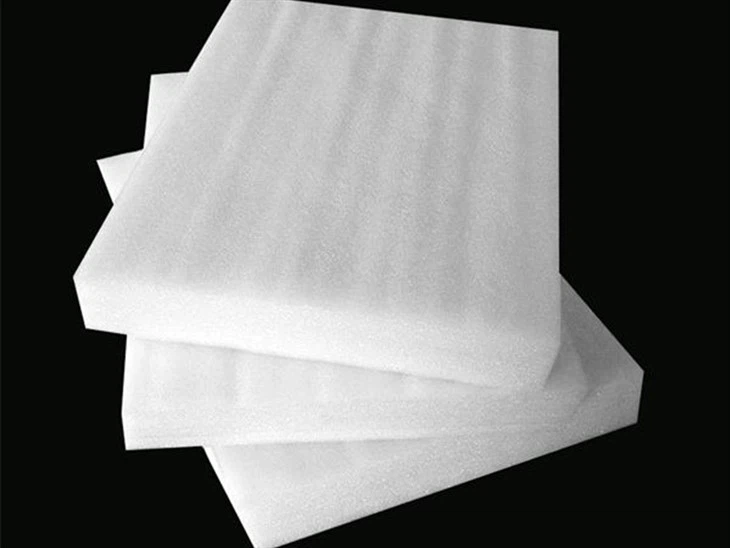
Pearl cotton, also called EPE, is a foamed polyethylene polymer. Pearl cotton has the characteristics of water and moisture proof, shockproof, sound insulation, heat preservation, good plasticity, strong toughness, recycling and environmental protection.
It has many advantages such as safety and strong impact resistance, as well as good chemical resistance. Pearl cotton packaging is widely used in daily life, in electronic appliances, instruments, medical equipment, five It is widely used in fragile packaging such as gold lighting, handicrafts, glass ceramics, toys, fruits, and wine.
Velcro products
When it comes to products like Velcro, many people must be using them every day. Whether it is the small switch on the cuff of a down jacket or the binding rope on the computer cable used by many people, it is all magic.
The specific form of sticker products is realistic. This product is made of many materials. It can be made of nylon material or polyester cloth material. It is often used in the use of Velcro.
Adhesive is used to fix it to a certain material, such as cuffs, bag openings, etc., and hot melt adhesive is indispensable in the production process.
Packaging manufacturing industry
For packaging and sealing of food, beverages, instant noodles, cigarettes, beer, medicine, etc., most applications of hot melt adhesive are achieved using a carton sealing machine. Packaging hot melt has obvious advantages in the packaging industry: beautiful and elegant packaging and printing solutions that do not harm packaging; convenient transportation, maintenance and storage management; conducive to automated machinery and improved efficiency; low-carbon and environmentally friendly, saving energy and protecting the ecological environment .
Automobile manufacturing industry
Hot melt adhesive particles are a type of glue that is extremely environmentally friendly and suitable for high-speed automatic assembly line operations. Today's automobile industry is developing rapidly, especially in our country. It has now become the world's largest automobile industry.
The largest sales country. With the improvement of the automation level of automobile production, the automobile industry needs a large number of fast bonding adhesives that can adapt to high-speed automated production and are environmentally friendly. Hot melt adhesive can just It meets all the above requirements, so hot melt adhesive is more and more widely used in the automobile industry, and its usage is also increasing year by year. It has become an irreplaceable type of glue in the automobile industry.
the final view of project



Adhering to Dirty Surfaces
To get the best bond possible, your substrates must be cleaned of any moisture, oil, dust, or other particles. Make sure everything you’re attaching your dots to is clean and dry.
Using the Wrong Size Dot
It might seem like the size of your glue dot is simply a matter of preference, but it takes more consideration than that. Your choice should depend on the size of the surface area you’re bonding. There is a correlation between the amount of surface contact and the strength of the bond. Therefore, the choice between using a ¾ inch dot or a ½ inch dot should depend on more than just your opinion. In addition to ensuring your bond is strong, choosing the right-sized hot melt adhesive dots ensures you’ll be able to appropriately space them so that your budget is spent more efficiently.
Applying Dots in Harsh Environments
Extreme heat, freezing cold, and wetness all put a lot of stress on adhesives. Glue dots are especially susceptible to failure in these harsh environments since they’re applied in a hardened state instead of having a chance to bond after application through processes like heating and drying. If the substances you’re bonding will be exposed to a harsh environment or the failure of your application will be catastrophic, you may want to consider a more secure hot melt solution.
Keeping Your Glue Dots on the Shelf Too Long
Hot melt adhesive dots don’t break down over time. However, since they’re already in their final, sticky state instead of a container or a hardened pre-melted form, they can more easily be contaminated with moisture and dust. To ensure a lasting bond, we recommend replacing unused glue dots after 18 months and always keeping them in the cleanest, driest place possible.
Choosing the Wrong Profile
“Profile” is the vertical thickness of your glue dot. A lower profile will be thinner or flatter, while a higher profile will have more depth. Low profile dots work great for very smooth, flat substrates that already fit snugly together before any adhesive is applied. Thicker, higher-profile dots are great for concave surfaces, which have curves, or that are otherwise irregularly shaped.
Choosing the Wrong Tack
Tack, which is a way to describe just how sticky something is, is vital to get right when it comes to hot melt adhesive dots. Tack measurements start at low, where the adhesive is considered removable. Tacks levels increase until they get to super-high tack, where the bond is considered permanent.
Our Factory
Jiangyin Weitao Plastic New Material Co., Ltd. was established on December 27, 2011. We have been engaged in this industry for more than 10 years. About three years after the establishment of the company, we have become the top enterprise in this adhesive industry, especially in the technology research and development, we have made a lot of achievements.


Our Certificate


FAQ
We're professional hot melt adhesive granules manufacturers and suppliers in China in China, specialized in providing high quality OEM service. We warmly welcome you to buy the best hot melt adhesive granules for sale here from our factory. For price consultation, contact us.
adhesive granules for textile industry, granular hot melt adhesive for hotel decorations, granular hot melt adhesive for temple decorations