

How long does it take for pes hot melt granule to solidify after melting?
Jun 13, 2025
Hey there! As a supplier of PES hot melt granules, I often get asked about how long it takes for these granules to solidify after melting. It's a crucial question, especially for those in industries that rely on the quick and efficient bonding of materials. So, let's dive right in and explore this topic in detail.
First off, let's understand what PES hot melt granules are. PES, or Polyester, hot melt granules are thermoplastic materials that turn into a liquid state when heated and solidify upon cooling. They're widely used in various industries such as textile, electronics, and automotive for bonding different materials due to their excellent adhesion, flexibility, and resistance to heat and chemicals.
Now, the solidification time of PES hot melt granules after melting can vary significantly depending on several factors. One of the most important factors is the temperature at which the granules are melted. Generally, the higher the melting temperature, the longer it might take for the molten PES to solidify. This is because when the granules are melted at a high temperature, they have more thermal energy, and it takes more time for this energy to dissipate and for the material to reach its solid - state transition temperature.
For example, if you melt PES hot melt granules at around 180°C, the solidification process might start within a few seconds, but it could take anywhere from 10 to 30 seconds for it to fully solidify and form a strong bond. On the other hand, if you lower the melting temperature to around 150°C, the solidification might start a bit faster, and the full solidification could occur within 5 to 20 seconds.
Another factor that affects the solidification time is the thickness of the applied molten PES. Thicker layers of molten PES take longer to solidify because there's more material that needs to lose its heat. A thin layer of molten PES, say around 0.1 mm, can solidify relatively quickly, maybe within 5 - 10 seconds. But if you apply a layer that's 1 mm thick, it could take several minutes to fully solidify.
The ambient temperature also plays a big role. In a cold environment, the molten PES will lose heat faster and solidify more quickly. For instance, if you're working in a room with a temperature of 10°C, the solidification time will be much shorter compared to working in a room at 30°C. In a cold environment, a thin layer of molten PES might solidify in just a couple of seconds, while in a warm environment, it could take 15 - 20 seconds or even longer.
The type of substrate the molten PES is applied to can also impact the solidification time. Some substrates are better heat conductors than others. If the substrate is a good heat conductor, like metal, it will draw heat away from the molten PES more quickly, speeding up the solidification process. In contrast, if the substrate is a poor heat conductor, such as a thick plastic or a fabric, the solidification will be slower.
Now, let's talk about how this knowledge can be useful in different industries. In the textile industry, where PES hot melt granules are used for bonding fabric layers, a fast - solidifying PES can increase the production speed. Manufacturers can use a lower melting temperature and a thinner layer of molten PES to achieve a quick bond, allowing them to produce more garments in less time.
In the electronics industry, where PES is used for bonding components, the solidification time needs to be carefully controlled. A too - fast solidification might not allow enough time for proper alignment of the components, while a too - slow solidification could lead to the components shifting out of place.
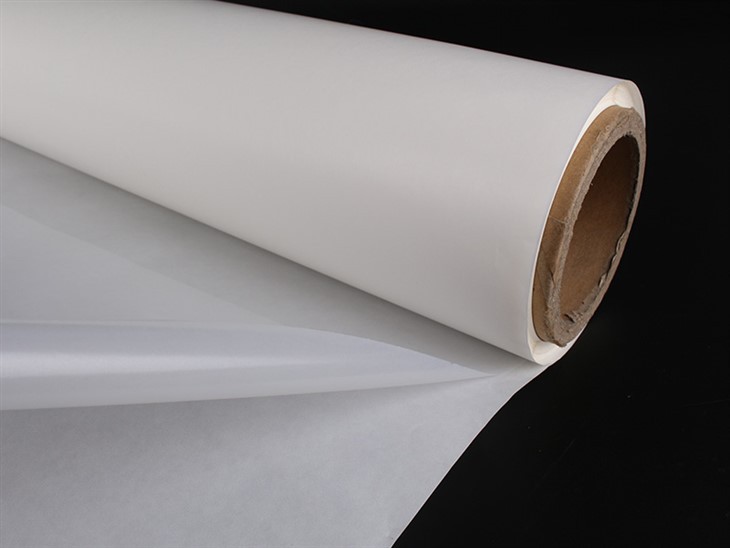
If you're interested in other types of hot melt products, we also offer EVA Hot Melt Adhesive Film Without Release Paper. This film is great for applications where you don't need a release paper, providing a clean and efficient bonding solution. Another option is our Thermoplastic Hot Melt Adhesive Film, which offers excellent thermoplastic properties for various bonding needs. And if you're looking for a thin adhesive solution, check out our Ultra Thin Adhesive Film.

As a supplier of PES hot melt granules, we understand the importance of providing high - quality products with consistent performance. We can offer technical support to help you determine the best melting temperature, layer thickness, and application method to achieve the optimal solidification time for your specific needs.
If you're in the market for PES hot melt granules or any of our other hot melt products, don't hesitate to reach out. We're here to assist you with your procurement and answer any questions you might have. Whether you're a small - scale manufacturer or a large - scale industrial company, we can provide the right products and solutions for your bonding requirements.
In conclusion, the solidification time of PES hot melt granules after melting is influenced by multiple factors including melting temperature, layer thickness, ambient temperature, and substrate type. By understanding these factors, you can optimize the bonding process in your industry and improve your production efficiency. So, if you want to learn more or start a procurement discussion, just get in touch!
References:
- Industry research on thermoplastic adhesives
- In - house testing data on PES hot melt granules