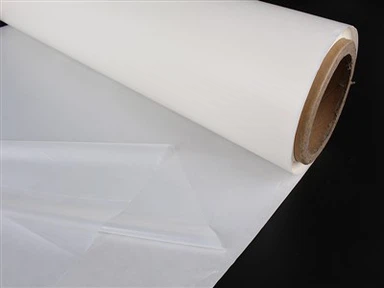
Performance requirements of hot melt adhesive films
Mar 16, 2025
In the automotive industry, hot melt adhesive films need to meet many performance requirements:
1. Adhesion performance
Initial viscosity: Hot melt adhesive film must have good viscosity at the moment of bonding, which can quickly fix the bonded material and avoid material displacement. This is particularly important in the automated assembly of automotive parts. For example, in the bonding process of car seat fabric and sponge, good initial viscosity can ensure that the fabric is quickly and smoothly bonded to the sponge.
Final bonding strength: It needs to have a high enough bonding strength to ensure that the automotive parts will not debond during long-term use. For example, after the automotive body sealing strip is bonded with a hot melt adhesive film, it must be able to withstand the tensile force generated by the frequent opening and closing of the door and the vibration during the vehicle's driving to ensure that the sealing strip is firmly attached to the body.
2. Temperature resistance
Low temperature performance: The hot melt adhesive film should not become brittle in cold environments. For example, in the winter in the north, the temperature may drop to minus 20 to 30 degrees Celsius. At this time, the hot melt adhesive film should still maintain good flexibility and bonding properties to avoid brittle cracking caused by low temperature and separation of bonded parts.
High temperature performance: In hot summer or in high temperature environments such as car engine compartments, the temperature may reach over 100°C. The hot melt adhesive film cannot soften or flow, and the position of the bonded parts must be stable. For example, when bonding parts of car interiors close to the engine compartment, the high temperature tolerance of the hot melt adhesive film is very high.
3. Chemical resistance
During the use of cars, they will be exposed to a variety of chemicals, such as gasoline, lubricants, detergents, etc. Hot melt adhesive films must be able to resist the erosion of these chemicals to ensure that the bonding performance is not affected. For example, the hot melt adhesive film used around the car's fuel tank needs to not undergo chemical changes when it comes into contact with gasoline to prevent debonding.
4. Flexibility and elasticity
During driving, automobile parts are constantly subjected to various stresses and deform. Hot melt adhesive film should have a certain degree of flexibility and elasticity, be able to deform with the deformation of the adhered parts, and still maintain good bonding performance after deformation.
5. Durability
Hot melt adhesive films must ensure that the bonding performance of automotive parts is stable throughout the service life of the vehicle. This includes resisting the damage to the bonding performance caused by factors such as ultraviolet radiation, oxidation, and moisture, and reducing the attenuation of bonding performance.
If you are interested in the performance requirements of hot melt adhesive films , we sincerely invite you to visit our website www.hotmeltadhesive-film.com ! Here you can find rich product information, industry-leading technical trends and professional customer service.