Production process of TPU film for fabrics
Feb 24, 2025
1. Raw material preparation
First, select high-quality TPU particles, whose performance indicators such as hardness, elasticity, and weather resistance must meet the needs of fabric lamination. Different fabric uses correspond to different characteristics of TPU. For example, TPU used in sportswear must have both high elasticity and good wear resistance. Dry the raw materials to remove moisture, because moisture will cause TPU hydrolysis during processing and reduce the quality of the film. Usually, the vacuum drying method is used, which is dried for several hours at a certain temperature and vacuum degree.
2. Extrusion plasticization
The dried TPU pellets are fed into the extruder. The extruder applies pressure to the material and pushes it forward by rotating the screw. During this process, the heating device of the barrel gradually heats the TPU pellets to a molten state, and the temperature is generally controlled at 180-230℃. Accurate temperature control is crucial. If the temperature is too low, the plasticization is insufficient, and the film will have problems such as hard lumps and rough surface; if the temperature is too high, the TPU may decompose and affect the performance.
3. Molding
The molten TPU is extruded through the die to form a sheet film of specific thickness and width. The design of the die determines the cross-sectional shape and dimensional accuracy of the film. Common die types include hanger dies, which can ensure uniform distribution of materials and produce films with uniform thickness. At the same time, the final thickness of the film is controlled by adjusting the extrusion speed and the pulling speed. The two need to be accurately matched to ensure that the film thickness tolerance is within the specified range.
4. Cooling and shaping
The film extruded from the die head has a high temperature and needs to be cooled and shaped. The common cooling method is to use a cooling roller. The film is close to the surface of the cooling roller, and the coolant circulating in the roller takes away the heat, so that the film is quickly cooled and solidified. The cooling speed will affect the crystal structure and performance of the film. Too fast or too slow may cause problems such as internal stress and warping in the film.
5. Post-processing
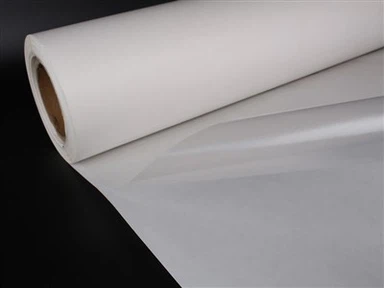
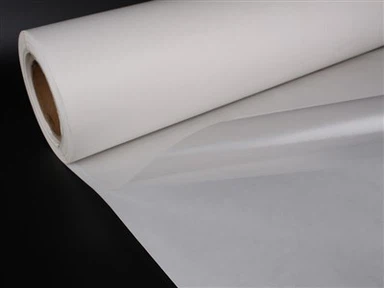
The formed film is rolled up and slit into suitable width and length according to the specifications required for fabric production. The film can then be surface treated, such as corona treatment, to increase the surface tension of the film and improve the bonding effect with the fabric. Finally, after strict quality inspection, qualified products can be packaged and shipped.
If you are interested in the production process of Tpu adhesive film for fabrics, welcome to visit www.hotmeltadhesive-film.com ! You will find a dynamic communication platform, which brings together industry information, product display, application cases, etc. Our professional team will also be on standby to listen to your needs at any time.