Hot Melt Innovation Achieves Stronger Adhesion
Oct 21, 2025
Breaking through the bottlenecks of traditional non-reactive hot melt adhesives
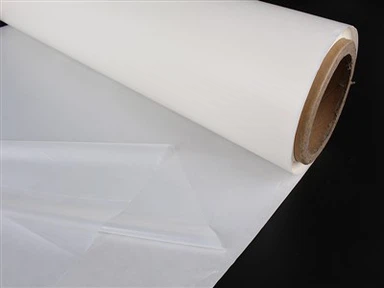
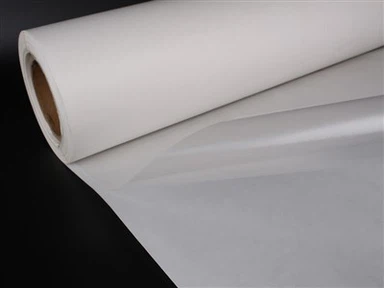
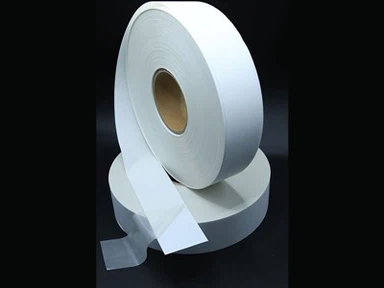
This new Hot Melt Adhesive film technology achieves super strong adhesion!
Traditional non-reactive hot melt adhesives use thermoplastic resins (such as EVA, PA, PO, etc.) as the main base material. They are melted into a liquid state by heating for coating, and then solidified upon cooling to room temperature through crystallization or glass transition, thus providing adhesion. The entire process is a reversible physical phase transition without accompanying chemical cross-linking reactions. This adhesion mechanism determines that traditional non-reactive hot melt adhesives have many technical bottlenecks, such as limited adhesive strength: they rely on van der Waals forces and physical entanglement formed by linear molecular structures to achieve adhesion to the substrate, resulting in insufficient adhesive strength. Tackifiers are needed to adjust this, but the effect is limited. Increasing the cohesive energy of the adhesive to improve adhesion strength would affect the wetting and penetration of the substrate; conversely, increasing the adhesive's ability to wet the substrate would affect the cohesive energy of the hot melt adhesive itself. How can we simultaneously improve the cohesive energy and wetting ability of non-reactive hot melt adhesives? Traditional thermoplastic resin technology offers almost no solution! As the saying goes.
Currently, a new technology effectively resolves the contradiction between the cohesive energy and wetting ability of traditional non-reactive hot melt adhesives: ionic liquid-based hot melt adhesives! Their chemical structure is shown below:

Although hot melt adhesives are solid at room temperature, they are actually composed of small molecules. When transitioning from a high-temperature liquid state to a room-temperature solid state, they primarily form supramolecular aggregates with high adhesive properties through self-assembly. On one hand, because they are low-molecular-weight adhesive materials, they possess superior wettability compared to traditional polymer adhesive materials, facilitating spreadability on various material surfaces. On the other hand, they enhance their cohesive energy and interaction with the substrate when the colloid cools to a solid state by increasing the melting point and enriching weak interactions. Based on the above characteristics, this ionic liquid-based non-reactive hot melt adhesive can achieve super strong adhesion to alumina substrates, with a shear bond strength of up to 9 MPa! (3) How exactly does this ionic liquid-based non-reactive hot melt adhesive achieve this? Here's some good news! Professor Liu Kai from Donghua University, who is in charge of the research team, will showcase his latest "ionic liquid"-based non-reactive hot melt adhesive technology at the "Adhesive World 2025 Global Adhesive Innovation Technology Sharing Conference" held at the Guangzhou Pazhou Exhibition. Professor Liu's series of ionic liquid-based non-reactive hot melt adhesives can achieve a bond strength of up to 9 MPa in normal environments and a bond strength of 4 MPa for stainless steel in underwater environments.
For more Hot Melt Adhesive Films information, please contact Weitao Plastic New Material,We hope we can help you!